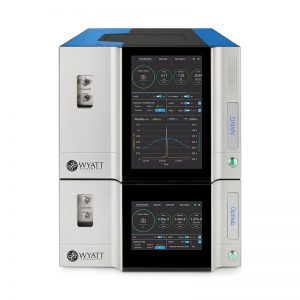
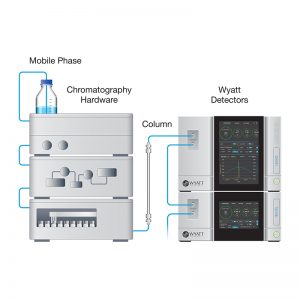
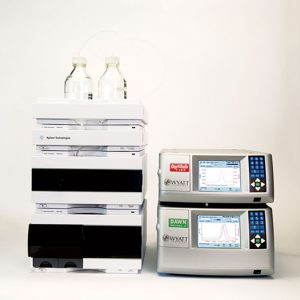
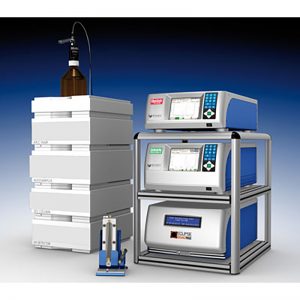
Exosome characterization has become a hot topic in molecular biology and medical research. This white paper gives a summary of how the Wyatt Eclipse® Field-Flow Fractionation system coupled to MALS and DLS allows a more detailed and comprehensive characterization of exosomes. Key is a physical separation of exosomes from other components of the biological matrix (serum, urine, etc.) with online determination of size, composition and charge. Fractions can be collected for further off-line analysis, most importantly, sequencing of DNA contained in exosomes. A recent publication by Zhang et.al. in Nature Biology has shown that biological function correlates with size and three distinct size populations could be separated for the first time using the Wyatt Eclipse FFF system. This white paper explains how the separation of exosomes can be achieved and which information is obtained by coupling MALS and DLS online.
Lab Alliance
Technology That Matters

- Home
- About Us
- Products
- Services
- Application
- Contact Us
- Home
- About Us
- Products
- Services
- Application
- Contact Us
Exosome charaterizard by FFF-MALS-DLS
You are here:
- Home
- Lab Application
- Exosome charaterizard by FFF-MALS-DLS