Liposomes and viral particles are are or growing interest in pharmaceutical and cosmetic applications. Liposomes are used for drug delivery formulations and as carrier systems for DNA. Virual particles are used for vaccination and immune stimulants. In all applications characterization of the colloidal suspensions is vital and has to cover several aspects. Not only size distribution, but also internal structure is of interest. This refers to shape (spherical vs. elongated), density and properties of the shell. Has a liposome been successfully loaded with a drug? A virus particle preparation looses biological activity during the concentration and cleaning procedure, can this be correlated with a change iin size distribution? Difficult analytical tasks like these cannot be solved with conventional sizing techniques applied on the unseparated sample.
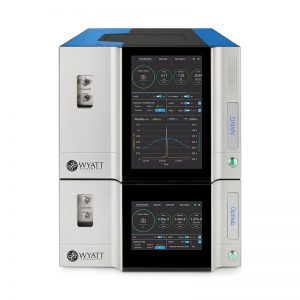
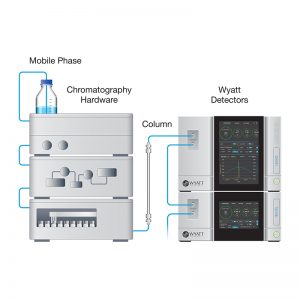
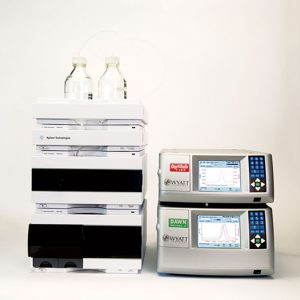
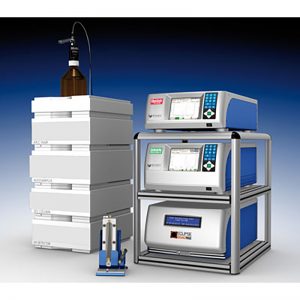
The Eclipse works on the principle of Flow FieldFlow Fractionation, which physically separates the particulates with very high resolution. Each fraction eluting from the channel is characterized according to radius and molar mass. The application note illustrates the wealth of information available from this sophisticated system.