Alternate lamination method (alternate adsorption method) is a method for forming thim films by adsorption induced by electrostatic interactions and the repeated alternate immersion of a substrate in a positive-ion-existing aqueous solution and a negative-ion-existing aqueous solution. Due to the promise of nano order thickess control, this method is expected to emerge as a next-generation film thickness coating method for LCDs, PDPs, semiconductors, and optics.
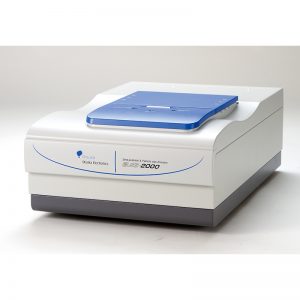
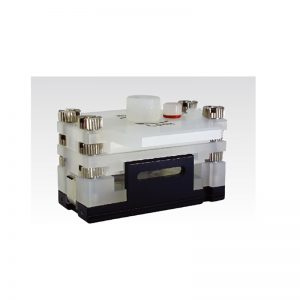
We measured the zeta potential of a layer of thin films formed on a slide glass substrate by the alternate lamination method using cationic and anionic polymer solutions. We used polyethyleneimine (PEI) as the cationic polymer. As the anionic polymer, we used Nafion with sulfone groups, which is also used as a polymer film for fuel cell.