Chitin is one of the most abundant biopolymers on earth (the other is cellulose). Chitin, or poly-N-acetylglucosamine, is the major polymer in the exoskeleton of marine arthropods and can also be found in fungi and yeasts. It is used in water treatment, photographic emulsions and dyeing improvement of synthetic fibers and fabrics.
Chitosan is deacetylated chitin. It can be obtained from shrimp or crab shells. Its applications vary from the therapeutic, such as wound healing, to cosmetics and dietary supplements.
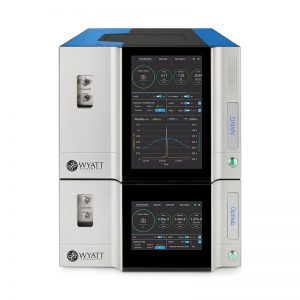
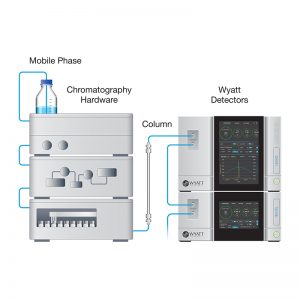
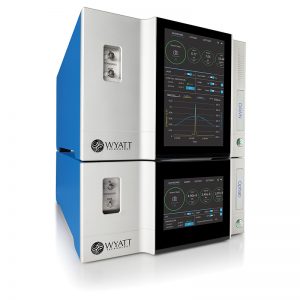
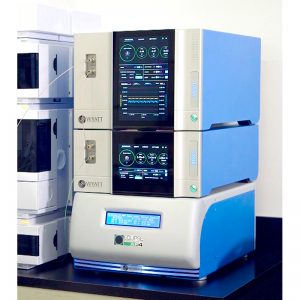
For many of these applications, it is useful to fully characterize the molar mass moments and distributions of the chitosan products. Size-exclusion chromatography in combination with multi-angle light scattering detection (SEC-MALS) provides an easy method to obtain these properties in an absolute manner, free of molecular references. In this note, we describe the results for two chitosan samples analyzed by SEC-MALS.