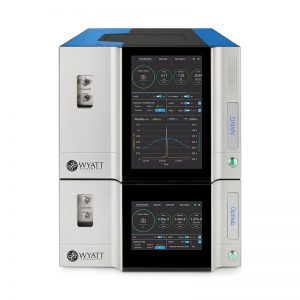
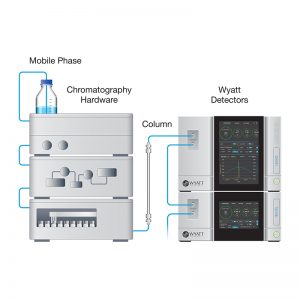
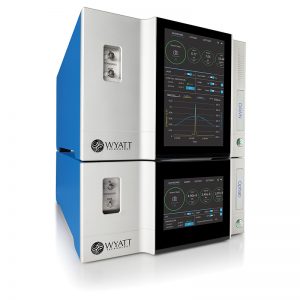
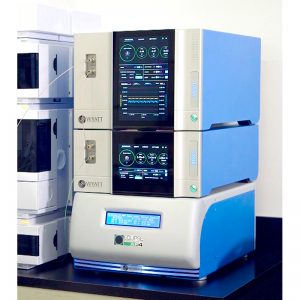
Characterizing key parameters of different heparin lots requires multiple techniques. Weight-average molar mass measured by multi-angle static light scattering (MALS) and hydrodynamic radius measured by dynamic light scattering (DLS) can be used to characterize the size and polydispersity of the molecule. These quantities can also be used for lot-to-lot comparison and to qualify heparin from different suppliers. Massively-parallel phase analysis light scattering (MPPALS) and DLS are used to calculate the net charge and characterize the purity of the sample. In this study, we compared heparin from two suppliers, including one lot modified with super-sulfated material.
Lab Alliance
Technology That Matters

- Home
- About Us
- Products
- Services
- Application
- Contact Us
- Home
- About Us
- Products
- Services
- Application
- Contact Us
Discriminating Heparin from Chondroitin Sulfate by Charge:Mass Ratio
You are here:
- Home
- Lab Application
- Discriminating Heparin from Chondroitin Sulfate…