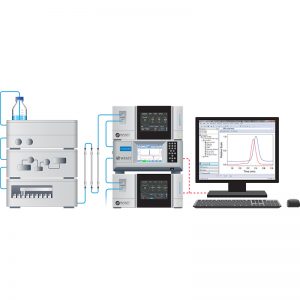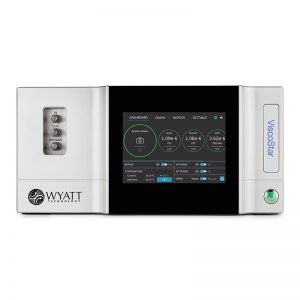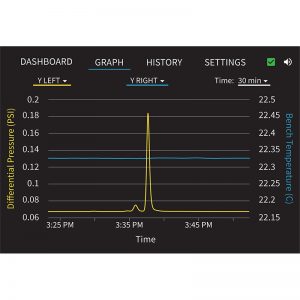
UHP‐SEC offers multiple benefits for synthetic polymer characterization. Using short, narrow‐bore columns, sub‐3 µm beads and ultra‐high pressures, size‐exclusion separations may be completed in less than 90 seconds, potentially realizing throughputs of hundreds of analyses per day. Sample and mobile phase consumption are greatly reduced, benefiting the environment as well as the costs of analytics.
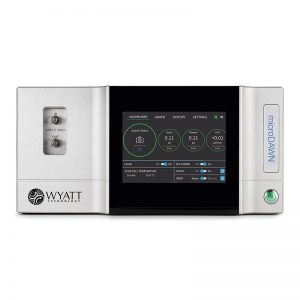
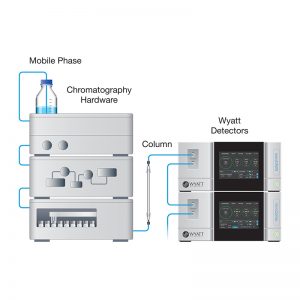
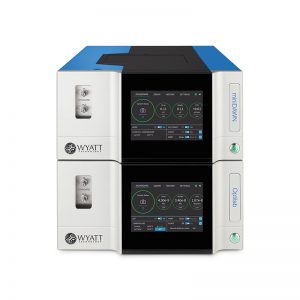
However, despite the clear advantages of UHP‐SEC, its rapid, low‐volume separation is more sensitive to column calibration errors and drift than traditional HP‐SEC. Additionally, only a small selection of column chemistries is available for eliminating non‐ideal sample‐column interactions; when these non‐idealities do occur, they invalidate column calibration by standards that are not chemically identical to the samples of interest. Therefore, it is essential to combine UHP‐SEC with online, low‐volume multi‐angle light scattering instrumentation (SEC‐MALS). SEC‐MALS constitutes an absolute technique for determining the molecular weight and size of polymers, independently of retention time. SEC‐MALS is necessary for UHP‐SEC characterization of branched polymers, rod‐like polymers and co‐polymers, all of which have no appropriate column calibration standards.