Poly(lactic-co-glycolic acid) (PLGA), is a copolymer formed from lactic acid and glycolic acid. Due to its biocompatibility and biodegradability, PLGA is used extensively in the biomedical field as medical devices or for drug delivery. Additionally, the component monomers themselves have very little toxicity. As they are naturally occurring, lactic acid and glycolic acid may be derived from renewable resources, making PLGA more attractive for use.
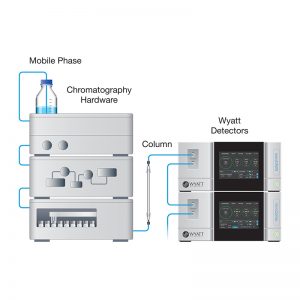
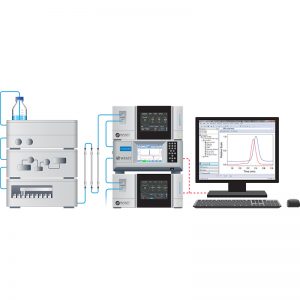
Determining the properties of PLGA is crucial in product formulation. For example, the lactic acid to glycolic acid ratio (L:G ratio) affects both the rate of hydrolytic degradation and solubility in organic solvents. Of particular importance is molecular weight (MW), which influences polymer strength and ease of processing into products. Traditionally, SEC with standard calibration has been used to analyze PLGA MW. However, there are several drawbacks to this method, including property disparities between standard and samples, and dependence on good chromatography.