Mud, organic matters, microbes, and other particles are carried suspended in river water. Water treatment refers to the process of removing such impurities and suspended matter to make water potable. The treatment includes steps to flocculate and precipitate the suspended matter, after which the supernatant water is treated by filtration. Depending on the water treated, flocculants include inorganic-based and polymer-based matter.
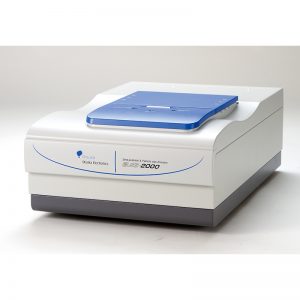
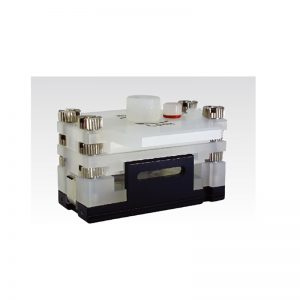
We measured particle diameters and zeta potential to evaluate dispersion states using sodium polystyrene (PSSNa), an anionic polymer electrolyte, as the polymer-based flocculant and alumina particles as suspended particles. We used 1 mM naCl (pH 6) as the solvent. We used an ultrasonicator for 10 minutes to achieve dispersion.