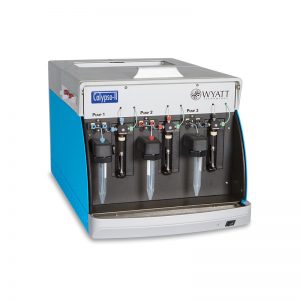
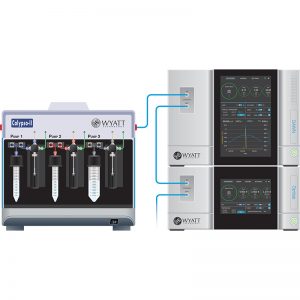
Complex interactions between proteins modulate the rotational direction of bacterial flagella. In particular, the middle and C-terminal domains of FliG (FliGM and FliGC, respectively) bind two different sites on the binding partner FliM, as part of the flagellar motor switch. We extend previous nuclear magnetic resonance (NMR) studies of the interactions between FliG domains with FliM via composition-gradient multi-angle static light scattering (CG-MALS) to confirm specific binding, quantify affinities, and identify the stoichiometries of complexes formed.
Lab Alliance
Technology That Matters

- Home
- About Us
- Products
- Services
- Application
- Contact Us
- Home
- About Us
- Products
- Services
- Application
- Contact Us
Evaluation binding of individual and combined domains in the bacterial flagellar motor complex by CG-MALS
You are here:
- Home
- Lab Application
- Evaluation binding of individual and…