Fluorescent macromolecules and nanoparticles are found in many areas of biological, chemical and medical research and development, from natural polymers to engineered nanodiagnostic particles. Basic physical characterization of these materials is no less essential to carrying out R&D than for non-fluorescing materials, but it is definitely more challenging due to interference of the fluorescent emission with detectors designed to measure scattered light.
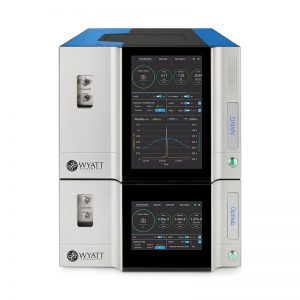
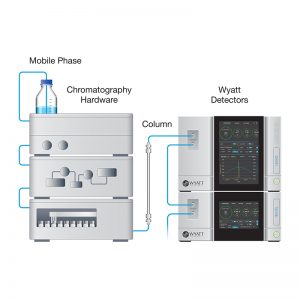
Instrumentation from Wyatt Technology® offers multiple avenues to characterization of fluorescent samples. This article describes how Wyatt’s SEC-MALS, DLS and PALS detectors overcome the challenges of fluorescence. Additional technologies that can deal with such samples are described, and several case studies presented.