Insulin, one of the most important mammalian hormones, regulates a multitude of metabolic functions including the control of the blood glucose level in the body. Under healthy conditions, insulin is produced and stored in the islet tissues of the pancreas and released depending on the metabolic situation. In patients suffering from diabetes, insulin cannot be sufficiently produced by the body. It has to be administered as a pharmakon via oral or injection pathways.
Under physiological conditions, insulin forms hexamer complexes in the presence of zinc ions. In the pancreas the hormone is also stored as zinc complexes. In pharmacological preparations therefore zinc is added to enable complex formation. To ensure safe and effective administration of insulin formulations, it is of vital interest to investigate, which oligomeric species are present in a specific preparation.
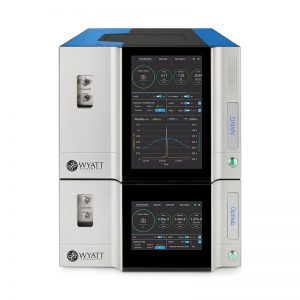
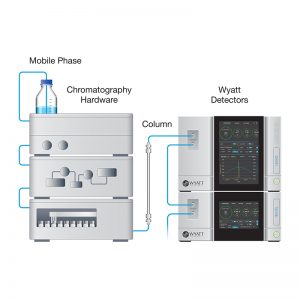
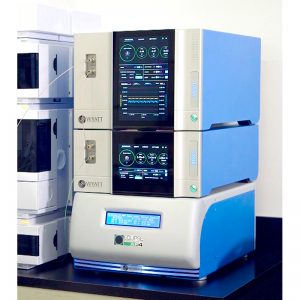
This application note shows how the combination of column chromatography (SEC/GPC) with Multi-Angle Light Scattering (MALS), Dynamic Light Scattering (DLS) and RI detection can be applied as a powerful tool to identify monomers, dimers, hexamers and higher aggregates of insulin. Using this approach, each preparation can be comprehensively characterized to determine optimal formulation, storage and administration conditions tor the patient’s benefit.