Sodium alginates are widely used as a food additive or as a sterile wound dressing. The molecular weight and conformation properties of this polysaccharide contribute directly to their end-use performance. When used as a thickening agent, the higher the molecular weight, the better the gel properties.
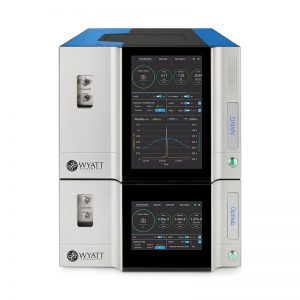
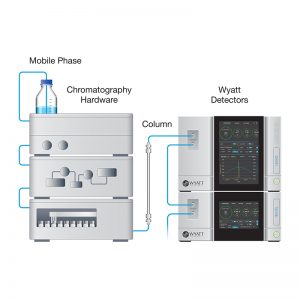
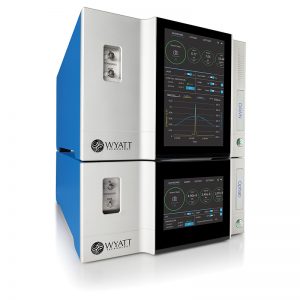
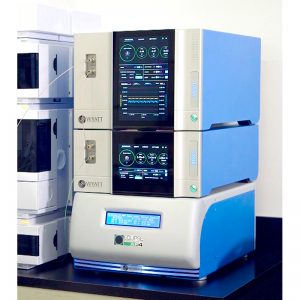
There has been considerable interest in recent years in the development of suitable test methods to characterize foods that have been irradiated to prolong shelf life. This note describes work undertaken on a grade of sodium alginate used as a food thickening agent, employing a DAWN® multi-angle light scattering (MALS) detector and Optilab® differential refractometer in conjunction with SEC, to determine the effect of gamma irradiation on the biopolymer.
SEC-MALS determines absolute molar mass, size and polymer conformation without relying on assumptions regarding column calibration standards or elution properties.