Lignin is the second most abundant natural polymer and a major constituent of green plants. In contrast to cellulose, it has no industrial/technical use except incineration for energy production. In view of the push for sustainability, efforts to find new ways for utilization of lignin have been increasing and more research is devoted to finding productive applications.
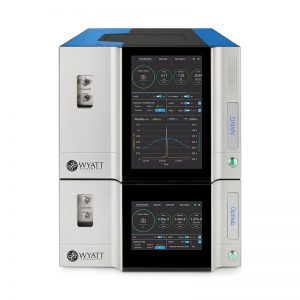
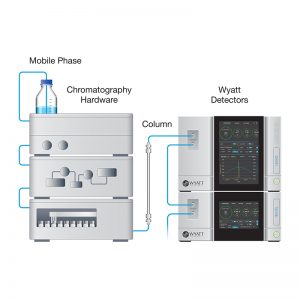
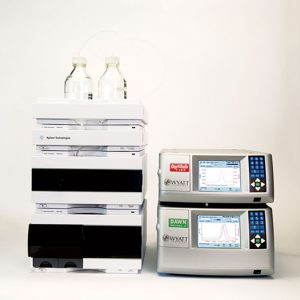
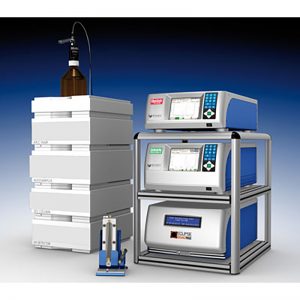
The most fundamental property of biopolymers is their molar mass distribution. Originally, lignin was assumed to be a very large macromolecule that provides support for cellulose in cell walls; then there seemed to be evidence that it is merely an oligomer consisting of a few monomer units. A significant breakthrough in the molar mass characterization of lignin and its derivative lignosulfonate was achieved by coupling the DAWN® online multi-angle light scattering (MALS) instrument to size-exclusion chromatography (SEC) or the EclipseTM field-flow fractionation (FFF) device.