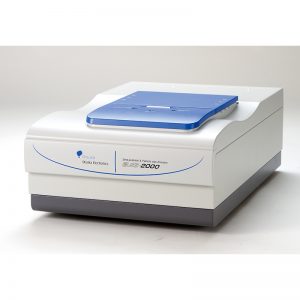
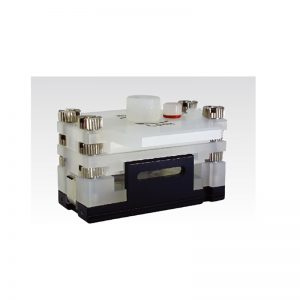
In the electrostatic interactions of biomaterials with living tissues, the surface potential on flat materials (cells and skin surfaces) have been rarely evaluated. We prepared human umbilical vein endothelial cells (HUVEC) cultured on polystyrene substrates and examined the effects of different polyion complexes (PIC) adsorbed to their surfaces and electrostatic interactions. PICs were prepared at different mixing ratio of anionic and cationic polymers (cation/anion, C/A ratio). The HUVEC cells were cultured using Endothelial Cell Basal Medium as the culture medium for three days on 1.4 cm x 3.4 cm polystyrene substrte at 37oC, 5% CO2 and 1.2 x 10⁴ cells/cm2, and made confluent. PICs were prepared to achieve C/A ratios of 1.5, 4, and 16 using poly (dimethylaminoethyl methacrylate) (PDMAEMA) as the cationic polymer and plasmid DNA as the anionic polymer. We performed measurements by injection PBS solution in dedicated cells for flat surface potential measurements and setting the samples immersed in the PBS solution.
Lab Alliance
Technology That Matters

- Home
- About Us
- Products
- Services
- Application
- Contact Us
- Home
- About Us
- Products
- Services
- Application
- Contact Us
Zeta Potential evaluation of a complex of cells cultured on substrate and their polyions
You are here:
- Home
- Lab Application
- Zeta Potential evaluation of a…